
The Ultimate Guide to Electrical Service Requirements for New Builds and Renovations in London
Tackling a property project in London is no small feat. Whether you are building from the ground up or breathing new life into a classic Victorian terrace, getting the wiring right is absolutely crucial. Providing a top-tier electrical service is about much more than just making sure the lights turn on; it is about safety, efficiency, and future-proofing your home.
When you are planning any major project, understanding the exact requirements for your electrical works is the difference between a smooth journey and a stressful, costly nightmare. If you are preparing for a major Renovation or planning a brand-new build, this guide covers everything you need to know to get it spot on from the get-go.
Why You Cannot Cut Corners on Your Property’s Wiring
London properties come with their own unique charm, but they also come with a strict set of rules. You might be tempted to focus all your energy on the layout, the kitchen fittings, or the paint colours, but what goes on behind the plasterboard is what truly powers your lifestyle.
Attempting to cut corners on your electrical works is a massive risk.
Not only do poorly executed installations pose a severe fire hazard, but they can also completely stall your project when it comes to getting the final sign-off from Building Control. A professional, compliant, and thoroughly planned electrical service ensures that your property is safe, legal, and tailored exactly to how you actually live in the space.
When planning your layout, you have to think about the daily routine. Where will you plug in your laptop? Do you need task lighting over the kitchen island? Will you be charging an electric vehicle on the driveway?
Asking these questions early on prevents you from having to tear down freshly painted walls to add a forgotten socket.
If you’re based in:
- Chiswick
- Ealing
- Hammersmith & Fulham
- Holland Park
- Kensington & Chelsea
- Knightsbridge
- Kew
- Kingston upon Thames
- Mayfair
- Putney
- Richmond
- Sutton
- Twickenham
- Wimbledon Village
, you can call SMR GROUP on 07789484208 for a fast, reliable 24-hour emergency electrician. We offer immediate response, competitive pricing, and fully qualified local electricians who can reach you quickly.
The Core Requirements for New Build Projects
Building a house from scratch gives you a brilliant blank canvas. However, it also means that every single wire, socket, and consumer unit must be planned meticulously. In a new build, the electrical works are generally split into two distinct phases: the first fix and the second fix.
The First Fix Phase
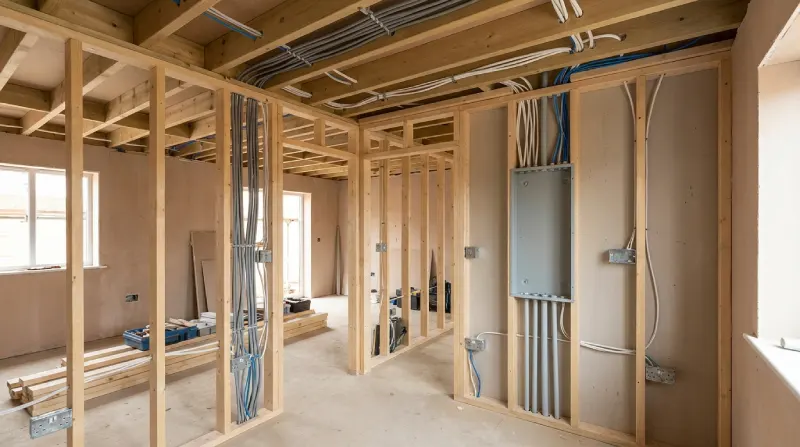
This happens right after the basic structure of the building is up, but before the walls are plastered. It involves pulling all the necessary cables through the floor joists, ceilings, and wall cavities.
- Routing cables: Positioning the main lines for lighting, power, and data.
- Fitting back boxes: Securing the metal or plastic boxes into the walls where your sockets and switches will eventually live.
- Installing the consumer unit (fuse box) shell: Getting the main hub ready for connection.
The Second Fix Phase
Once the plasterers have finished and the walls are painted, the electricians return for the second fix. This is where the magic happens and your property actually comes to life.
- Connecting the faceplates: Fitting the actual sockets, light switches, and dimmer plates.
- Installing light fixtures: Hanging pendants, fitting spotlights, and setting up exterior lighting.
- Powering up the consumer unit: Connecting the breakers and making the system live.
For a new build, your chosen electrical service provider must ensure everything complies strictly with Part P of the Building Regulations and the 18th Edition of the Wiring Regulations (BS 7671).
This guarantees the structural integrity and safety of your new home.
Tackling a Renovation: What You Need to Know
A Renovation presents a completely different set of challenges compared to a new build. When you are stripping back an older London property, you never quite know what you are going to find behind the walls.
Many period homes still rely on outdated wiring systems that simply cannot handle the load of modern appliances. If you are tearing down walls or adding an extension during your Renovation, it is the perfect time to assess the state of your existing system. Doing a patch job on old wiring is a false economy. If the wiring is old, degraded, or lacks an earth connection, a full rewire might be the only safe option.
During a Renovation, the electrical works often require a lot more problem-solving. Electricians have to carefully navigate around existing plumbing, preserve historical architectural features, and figure out how to integrate modern smart tech into a house built over a century ago.
The Non-Negotiable Rules: UK Electrical Regulations
If you live in London, you cannot just hire anyone with a pair of wire strippers to sort out your home. The UK has incredibly strict guidelines to ensure public safety, and failing to adhere to them can invalidate your home insurance and make it incredibly difficult to sell your property in the future.
Part P of the Building Regulations
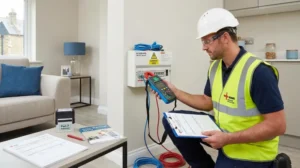
Introduced to keep homeowners safe, Part P dictates that anyone carrying out electrical works in a dwelling must ensure reasonable provision has been made to protect persons operating, maintaining, or altering the installations from fire or injury. In simple terms, most major electrical jobs in a home must be signed off by a competent person or checked by Local Authority Building Control.
BS 7671 (The 18th Edition)
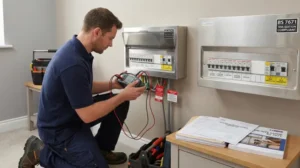
This is the national standard for electrical installation. It covers everything from the type of consumer unit you need (which must now be made of a non-combustible material like metal) to the requirement for RCDs (Residual Current Devices) that trip the circuit instantly if there is a fault, preventing fatal electric shocks.
Hiring a team that provides a fully compliant electrical service means you do not have to lose sleep worrying about the legalities. They will handle the installation, the testing, and the all-important paperwork.
Hiring the Right Team in London
Finding a trustworthy tradesperson can sometimes feel like a lottery. When you type “best electrician near me in london” into your search bar, you are met with thousands of results.
But how do you filter out the rogue traders from the genuine professionals?
Always look for a registered electrician. In the UK, checking if a contractor is registered with a regulatory body like the NICEIC (National Inspection Council for Electrical Installation Contracting) or NAPIT is your best safety net. These bodies regularly assess their members to ensure their electrical works meet the highest national standards.
Your contractor should be transparent about their pricing, clear about the timeline, and willing to answer any questions you have. A dedicated electrical service team will walk you through the design process, helping you choose the right fittings and layout for your specific lifestyle.
A Step-by-Step Breakdown of the Electrical Process
To make things easier to digest, here is a quick breakdown of how a standard installation process flows, whether it is for a new build or a major property overhaul.
| Project Stage | What Happens Behind the Scenes | Why It Matters |
|---|---|---|
| 1. Initial Consultation | Discussing the layout, load requirements, and smart home desires. | Ensures the design matches your lifestyle and budget. |
| 2. Designing the Plan | Creating detailed schematics for where every wire and socket will go. | Prevents mistakes and delays during the physical installation. |
| 3. First Fix | Pulling cables through walls, ceilings, and floors before plastering. | Lays the invisible foundation for your property’s power. |
| 4. Second Fix | Installing the visible elements: sockets, switches, and lighting fixtures. | Brings the design to life and makes the system usable. |
| 5. Testing & Inspection | Rigorous fault-finding and safety checks on the live system. | Guarantees the installation is completely safe for your family. |
| 6. Certification | Issuing the Electrical Installation Certificate (EIC). | Provides legal proof that the job meets all UK regulations. |
If you’re based in:
- Chiswick
- Ealing
- Hammersmith & Fulham
- Holland Park
- Kensington & Chelsea
- Knightsbridge
- Kew
- Kingston upon Thames
- Mayfair
- Putney
- Richmond
- Sutton
- Twickenham
- Wimbledon Village
, you can call SMR GROUP on 07789484208 for a fast, reliable 24-hour emergency electrician. We offer immediate response, competitive pricing, and fully qualified local electricians who can reach you quickly.
Future-Proofing Your London Property
We are living in an increasingly digital and eco-conscious world. What works for a home today might not be enough in five or ten years. When you are paying for extensive electrical works, it pays to think ahead. Future-proofing your home adds significant value to the property and saves you from having to do more invasive work down the line.
Smart Home Integration

The demand for smart homes in London is skyrocketing. From intelligent lighting systems that you can control via your smartphone, to smart thermostats that learn your routine and save on heating bills, integrating these features requires specific wiring infrastructure. Data cables (like Cat6) should be run alongside standard power cables to ensure your Wi-Fi is flawless in every room.
Electric Vehicle (EV) Chargers
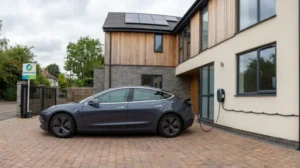
With the ban on new petrol and diesel cars looming, having a dedicated EV charging point on your driveway is rapidly becoming a standard requirement. Even if you do not own an electric car right now, asking your electrical service provider to run the necessary cabling to the exterior of your property during your build will save you a massive headache later.
Renewable Energy and Solar

If you are planning a high-end Renovation or a modern new build, you might be considering solar panels or air source heat pumps. These green technologies require complex electrical works and a consumer unit capable of handling the integration of renewable energy sources.
Budgeting for Your Project: Avoiding Hidden Costs
Nobody likes a nasty surprise when the final invoice arrives. Budgeting accurately for electrical works is notoriously difficult for homeowners because so much of the cost is hidden behind the walls.
The size of the property, the specification of the fittings (standard white plastic vs. bespoke brushed brass), and the complexity of the smart tech will all impact the final price. The best way to keep control of your budget is to finalise your electrical plan before the first fix begins.
Changing your mind and deciding you want three extra double sockets on a wall that has already been plastered and painted will cost you significantly more in labour and materials.
A reputable company offering a comprehensive electrical service will provide a detailed, itemised quote. They will break down the costs of the first fix, the second fix, and the final testing, so you know exactly where your money is going.
The Crucial Testing and Certification Phase
Once the tools are packed away and the lights are shining brightly, the job is still not officially finished. The final, and arguably most important, step of any major project is the testing and certification.
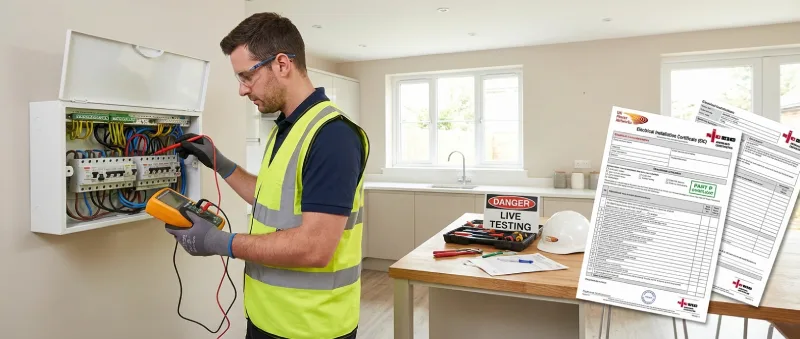
Before handing over the keys, the electrician must perform a series of dead and live tests on the system to ensure there are no faults, that everything is earthed correctly, and that the RCDs trip in the required timeframe.
Upon successful completion, you will be handed an Electrical Installation Certificate (EIC). This document is your golden ticket. It proves that the electrical works have been carried out to the required British Standard.
If you ever decide to sell your London home, the buyer’s solicitor will ask for this document. If you cannot produce it, it can hold up the sale or force you to pay for an expensive retrospective Electrical Installation Condition Report (EICR).
Upgrading the Consumer Unit
Sometimes, during a Renovation, you might find that the wiring itself is in relatively good condition, but the consumer unit (fuse box) is hopelessly out of date. Old fuse boards with rewirable fuses offer very little protection by modern standards.
Upgrading the consumer unit is a core part of updating a property’s safety. A modern unit will be equipped with RCD protection and miniature circuit breakers (MCBs) that protect individual circuits from overloading.
This is a highly specialised job and must be carried out by a professional who will test the entire property’s wiring before switching the new board on. Providing this specific electrical service ensures that your older property is brought right up to modern safety standards without necessarily having to rip open every wall.
Dealing with Power Demands in Modern Kitchens
The kitchen is the heart of the home, but it is also the room with the heaviest electrical load. When planning the electrical works for a new kitchen, the power requirements are immense.
You have to account for the induction hob, the double oven, the boiling water tap, the integrated coffee machine, and the wine cooler. Many of these high-draw appliances require their own dedicated circuit wired directly back to the consumer unit. If you try to run them all off a standard ring main, you will be constantly tripping the power.
A meticulous electrical service provider will calculate the total maximum demand of your new kitchen and ensure the infrastructure is robust enough to handle cooking a Sunday roast with all the appliances running simultaneously.
If you’re based in:
- Chiswick
- Ealing
- Hammersmith & Fulham
- Holland Park
- Kensington & Chelsea
- Knightsbridge
- Kew
- Kingston upon Thames
- Mayfair
- Putney
- Richmond
- Sutton
- Twickenham
- Wimbledon Village
, you can call SMR GROUP on 07789484208 for a fast, reliable 24-hour emergency electrician. We offer immediate response, competitive pricing, and fully qualified local electricians who can reach you quickly.
Frequently Asked Questions
1. How long does a full rewire usually take?
For a standard three-bedroom house in London, the electrical works usually take around one to two weeks, split between the first and second fix. However, if the property is occupied or fully furnished, it will take longer.
2. Can I do some of the electrical work myself to save money?
It is highly advised against. While changing a lightbulb or a simple faceplate is fine for a DIYer, anything involving installing new circuits, working on the consumer unit, or running cables in special locations (like bathrooms) must comply with Part P. Using a professional electrical service is the only way to ensure it is legal and safe.
3. What is the difference between a first fix and a second fix?
The first fix involves all the hidden wiring and back boxes installed before the walls are plastered. The second fix is the installation of the visible sockets, switches, and light fittings after the decorating is mostly complete.
4. Will my new build need a specific type of fuse box?
Yes. Modern regulations dictate that all new consumer units installed during your electrical works must have a non-combustible (usually metal) casing to contain any potential fires, alongside comprehensive RCD protection.
5. At what stage of a Renovation should I call an electrician?
You should involve your electrician right at the very beginning during the planning stage. Sorting out your electrical service plan early ensures cables can be run before plumbing or plastering gets in the way.
6. Do I really need to plan for smart home tech now?
Even if you are not installing smart lighting today, having your electrician run deep back boxes and a neutral wire to your switches during the electrical works will make it incredibly easy and cheap to upgrade to smart tech in the future.
Bringing Your Project to Life
Undertaking a major property project in the capital is a thrilling experience. Watching a space transform from a dusty building site into a modern, comfortable home is incredibly rewarding. However, the backbone of that home will always be its wiring.
From perfectly placed ambient lighting to a robust consumer unit that keeps your family safe, getting the electrical works right is non-negotiable. It requires careful planning, strict adherence to UK regulations, and a deep understanding of how modern families live and use power.
By prioritising a professional, high-quality installation from the start, you ensure your property is not only beautiful but completely safe, efficient, and ready for whatever the future brings.
Related articles:
- Hidden Electrical Dangers Landlords Miss
- Roles & Responsibilities of an Electrician in London
- do i really need an electrical certificate for my house ?
Written and produced by : SMR Group