
Living in London comes with enough expenses as it is—council tax, the congestion charge, and just the price of a pint these days! So, when someone mentions getting the electrics checked, it’s natural to clutch your wallet and ask:
Do I really need an electrical certificate for my house ?
or is this just another bit of bureaucracy designed to empty my bank account?
Look, we get it. Whether you’re in a swanky flat in Canary Wharf or a Victorian terrace in Ealing, dealing with property paperwork is a headache. But here’s the thing: electricity isn’t something you want to gamble with. In this guide, we’re going to cut through the jargon, ignore the scaremongering, and give you the straight, honest answer about the electrical certificate—when you legally need it, when you simply should have it, and why ignoring it might cost you a lot more than the price of an inspection.
We’re going to cover absolutely everything. By the end of this read, you won’t have a single question left. Let’s get your home sorted. 🇬🇧💡
If you’re based in:
- Chiswick
- Ealing
- Hammersmith & Fulham
- Holland Park
- Kensington & Chelsea
- Knightsbridge
- Kew
- Kingston upon Thames
- Mayfair
- Putney
- Richmond
- Sutton
- Twickenham
- Wimbledon Village
, you can call SMR GROUP on 07789484208 for a fast, reliable 24-hour emergency electrician. We offer immediate response, competitive pricing, and fully qualified local electricians who can reach you quickly.
What on Earth is an Electrical Certificate? (The Basics)
Before we dive into the “do I need it” part, let’s clarify what “it” actually is. You might hear tradespeople throwing around terms like “EICR,” “Periodic Inspection,” or “Fixed Wire Testing.” Don’t panic; they are mostly talking about the same thing.
An Electrical Installation Condition Report (EICR) is the official name for what most Londoners just call an electrical certificate. Think of it exactly like an MOT for your house. You wouldn’t drive a car for 20 years without checking the brakes, right? An EICR checks the “brakes” of your home’s wiring.
What happens during the check?
A qualified electrician comes to your property and tests the hidden cabling, the fuse box (consumer unit), and the accessories (sockets and switches). They are looking for:
- 🔥 Potential fire hazards.
- ⚡ Risk of electric shock.
- 🛑 Defective DIY work done by previous owners.
- 📉 Lack of earthing or bonding.
🏠 The Big Question: If I Own My Home, Is It Legal?
Let’s answer the title question directly. If you are an owner-occupier (meaning you own the house and you live in it yourself), you are NOT legally required to have an electrical certificate just to live there.
Unlike gas safety certificates which have strict annual rules for landlords, there is currently no law in the UK that forces a homeowner to have an EICR to sleep in their own bed. No police officer is going to kick your door down because your fuse box is from the 1980s.
HOWEVER… (And it’s a big however)
Just because it’s not illegal doesn’t mean it’s a good idea to ignore it. Here is why savvy London homeowners get it done anyway:
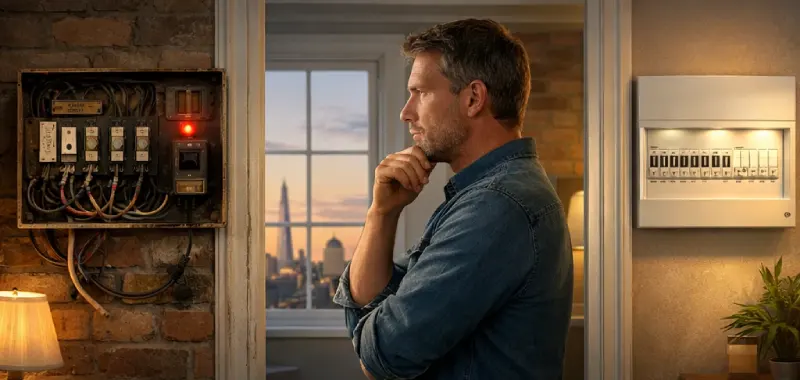
- Safety First: London’s housing stock is old. Many properties in zones 1 to 4 haven’t been rewired since the Beatles were together. Old rubber wiring or degrading PVC can degrade silently behind walls.
- Insurance Payouts: If your house burns down due to an electrical fault and you cannot prove the system was maintained, your insurer might refuse to pay out. That’s a risk not worth taking.
- Peace of Mind: Knowing your family is safe from shocks is priceless.
🏗️ Selling Your London Property? You Better Read This
This is where the “optional” part starts to feel very “mandatory.” If you are putting your house on the market, you will quickly realize the answer to “Do I really need an electrical certificate?” shifts dramatically.
While you technically can sell a house without one, in practice, it is becoming nearly impossible in the current London market.
The Buyer’s Solicitor Will Demand It
Buyers are cautious. They are paying a premium for London property, and their solicitors are paid to protect them. Almost every solicitor will ask for a valid electrical certificate during the conveyancing process.
- If you have one: The sale moves smoothly. ✅
- If you don’t: The buyer will either demand you pay for one, or worse, they will use the “unknown state of electrics” to gazunder you (lower their offer) by thousands of pounds to cover the cost of a potential rewire.
Pro Tip: Spending £150-£300 on a certificate now could stop a buyer from knocking £5,000 off the asking price later.
If you’re based in:
- Chiswick
- Ealing
- Hammersmith & Fulham
- Holland Park
- Kensington & Chelsea
- Knightsbridge
- Kew
- Kingston upon Thames
- Mayfair
- Putney
- Richmond
- Sutton
- Twickenham
- Wimbledon Village
, you can call SMR GROUP on 07789484208 for a fast, reliable 24-hour emergency electrician. We offer immediate response, competitive pricing, and fully qualified local electricians who can reach you quickly.
🔑 Landlords: The Rules Are Different for You
If you rent out a property—whether it’s a whole house in Richmond or a studio in Shoreditch—listen up. It is 100% a legal requirement for you.
Since July 2020, private landlords in England must ensure:
- Electrical safety standards are met.
- An EICR is carried out by a qualified person every 5 years (or sooner if stated).
- A copy of the report is given to the tenant within 28 days.
The penalty? Local councils can fine you up to £30,000 for non-compliance. Don’t risk it. If you are a landlord asking “Do I need one?
the answer is a hard YES.
🛠️ Renovations, Extensions, and “Part P”
Londoners love a renovation. Loft conversions, rear extensions, new open-plan kitchens—we’re always fixing up our places. This introduces a different type of certificate.
If you are having significant electrical work done (like adding a new circuit for an induction hob or wiring a new bathroom), you need an Electrical Installation Certificate (EIC) and compliance with Part P of the Building Regulations.
Don’t confuse the two!
- EICR: Checks the condition of existing wiring (The MOT).
- EIC / Part P: Certifies that new work is safe and legal.
If you hire a cowboy builder who does the electrics but doesn’t give you a certificate, you will have a nightmare trying to sell that house later. The local council building control needs to be notified of this work. Always ensure your electrical service provider can sign off their own work.
If you’re based in:
- Chiswick
- Ealing
- Hammersmith & Fulham
- Holland Park
- Kensington & Chelsea
- Knightsbridge
- Kew
- Kingston upon Thames
- Mayfair
- Putney
- Richmond
- Sutton
- Twickenham
- Wimbledon Village
, you can call SMR GROUP on 07789484208 for a fast, reliable 24-hour emergency electrician. We offer immediate response, competitive pricing, and fully qualified local electricians who can reach you quickly.
🔎 What Do the Codes on the Report Mean?
So, you’ve decided to get the check done. The electrician hands you a report filled with codes. It looks like double Dutch. Here is the translation:
The report will grade the installation as either “Satisfactory” or “Unsatisfactory”. If it’s unsatisfactory, you cannot pass. The faults are coded:
Code C1: Danger Present 🚨
- Meaning: Risk of injury is immediate. The electrician must make this safe before leaving.
- Example: Exposed live wires where a child could touch them.
Code C2: Potentially Dangerous ⚠️
- Meaning: Urgent remedial work required. It’s not live right now, but a fault could make it dangerous quickly.
- Example: No earth bonding to your gas or water pipes.
Code C3: Improvement Recommended 💡
- Meaning: It doesn’t comply with the absolute latest regulations, but it’s not unsafe.
- Example: You have a plastic consumer unit instead of a metal one (if it’s not broken), or sockets mounted slightly too low.
- Note: You can still pass the inspection with C3 codes, but fixing them is a good idea.
🏚️ The London Factor: Old Wiring in Period Homes
London is unique because our housing stock is ancient. If you live in a Victorian or Edwardian property, you need to be extra vigilant.
Many of these homes have been “updated” in patches over the decades. You might have a modern socket in the lounge, but 50-year-old crumbling wiring in the loft.
Signs your London home urgently needs an EICR:
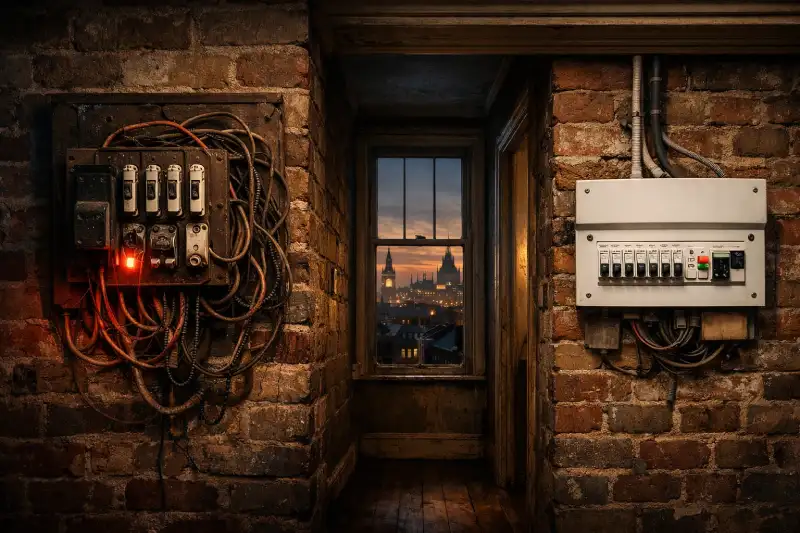
- Old Fuse Box: If you still have rewireable fuses (the ones with actual wire you have to wrap around), your system is outdated.
- Round Switches: If your light switches are round or mounted on wooden blocks.
- Fabric/Rubber Cables: Black rubber cables were phased out in the 60s. They crumble when touched.
- Flickering Lights: A sign of loose connections which cause fires.
💸 How Much Does an Electrical Certificate Cost in London?
We know living here is pricey, so let’s talk numbers. The cost of an EICR depends on the size of your property.
- Studio / 1-Bed Flat: £120 – £180
- 2-3 Bed House: £180 – £250
- 4+ Bed House: £250 – £350+
Note: These are averages. Prices vary depending on location and complexity.
Is it cheap? Maybe not. Is it cheaper than rewiring a burnt-out living room? Absolutely. Think of it as an investment in the asset value of your property.
🕵️♀️ How to Find a Reliable Electrician in London?
This is the hardest part. You type “electrical service near me” into Google and get a million results. Who do you trust?
In London, sadly, there are plenty of rogue traders. To ensure your certificate is actually worth the paper it’s written on, you must use a registered electrician.
Look for these logos:
- NICEIC (The biggest regulatory body in the UK).
- NAPIT
- Stroma
If someone offers to do your EICR for £50 cash in hand and writes it on the back of a napkin, run away. An EICR is a legal document; it needs to be traceable.
At SMR Groups, we specialize in London residential properties. We know the difference between a posh new build in Battersea and a quirky conversion in Camden. We provide a professional electrical service that leaves no stone unturned.
If you’re based in:
- Chiswick
- Ealing
- Hammersmith & Fulham
- Holland Park
- Kensington & Chelsea
- Knightsbridge
- Kew
- Kingston upon Thames
- Mayfair
- Putney
- Richmond
- Sutton
- Twickenham
- Wimbledon Village
, you can call SMR GROUP on 07789484208 for a fast, reliable 24-hour emergency electrician. We offer immediate response, competitive pricing, and fully qualified local electricians who can reach you quickly.
❓ Answering Your Burning Questions
We know you still have specific questions. Let’s fire through them.
Q: How long does the certificate last?
A: For rentals, 5 years. For homeowners, it is recommended every 10 years (or upon change of occupancy). For swimming pools, every year!
Q: Can I do the check myself?
A: No. Unless you are a qualified electrician with the right test equipment (which costs thousands), you cannot issue an electrical certificate.
Q: My house is new (under 10 years old). Do I need one?
A: Generally, no. A new build should come with an Electrical Installation Certificate (EIC) valid for 10 years. But check your paperwork!
Q: Does the certificate cover portable appliances (Microwaves, TVs)?
A: No, that is PAT Testing (Portable Appliance Testing). The EICR covers the fixed wiring in the walls, the sockets, and the fuse board.
Q: What if I fail the test?
A: Don’t worry. You will get a report detailing exactly what is wrong. You usually have 28 days to fix the “C2” issues to get a “Satisfactory” rating.
Q: Will the electrician cut holes in my walls?
A: Rarely. The testing is mostly done at the sockets and the fuse board. They might need to unscrew a few sockets to look behind them, but they won’t be wrecking your plasterwork.
⚡ Why SMR Groups is Your Best Bet in London
When you are frantically searching for an electrical service near me because your sale is about to fall through, or you just smelled something fishy near the fuse box, you need speed and reliability.
We serve the entire London area. We understand the urgency of estate agents and the strict requirements of insurance companies. We don’t just tick boxes; we ensure your home is genuinely safe for you and your family.
If you’re based in:
- Chiswick
- Ealing
- Hammersmith & Fulham
- Holland Park
- Kensington & Chelsea
- Knightsbridge
- Kew
- Kingston upon Thames
- Mayfair
- Putney
- Richmond
- Sutton
- Twickenham
- Wimbledon Village
, you can call SMR GROUP on 07789484208 for a fast, reliable 24-hour emergency electrician. We offer immediate response, competitive pricing, and fully qualified local electricians who can reach you quickly.
Conclusion: The Final Verdict
So, back to the start: Do I really need an electrical certificate for my house ?
- If you are a landlord, YES, absolutely.
- If you are selling, YES, practically speaking.
- If you are an owner-occupier staying put, NO, not legally—but YES, you should get one for safety and peace of mind.
Electricity is the lifeblood of our modern London lives. It powers our kettles, charges our phones, and keeps our heaters running during those damp British winters. Don’t take it for granted. A simple check every ten years is a small price to pay to ensure your home doesn’t become a statistic.
If you are unsure about the state of your wiring, or if you just can’t remember the last time anyone looked at that dusty fuse box under the stairs, it’s time to act. Book a professional electrical certificate inspection today and sleep soundly tonight. 🛌💤