What Is an EICR, and Why Does It Matter?
An unsatisfactory EICR means real electrical problems were found in your property — and it happens more often than most homeowners and landlords realise. Here’s what an EICR (Electrical Installation Condition Report) is, and what it means when yours comes back unsatisfactory.
For landlords, it’s a legal requirement in England — you must have a valid EICR every 5 years, or sooner if the last one flagged issues. For homeowners, it’s the clearest way to know if your wiring is safe, especially in older properties.
The report ends with one of two results: Satisfactory, or Unsatisfactory. An unsatisfactory result doesn’t mean your home is unusable — it means specific problems were found that need fixing, and how urgent each one is.
Understanding the Codes: C1, C2, C3, and FI
Every issue found in an EICR gets a code, showing how urgent it is:
- C1 – Danger present. Immediate risk of injury. This needs fixing straight away, sometimes on the spot.
- C2 – Potentially dangerous. Not an immediate emergency, but urgent remedial work is needed.
- C3 – Improvement recommended. Not dangerous, but upgrading it would bring things up to current standards.
- FI – Further investigation required. Something looks off, but needs more testing before anyone knows how serious it is.
If a report contains any C1 or C2 items, the overall result is marked Unsatisfactory — even if most of the installation is fine.
What We Found in This Chiswick Flat
We recently inspected a flat in Chiswick, and the result came back unsatisfactory. Here’s what that looked like in practice — not just a checklist, but real risks sitting in the walls and fuse box of a lived-in home.
The most urgent issue (C1):
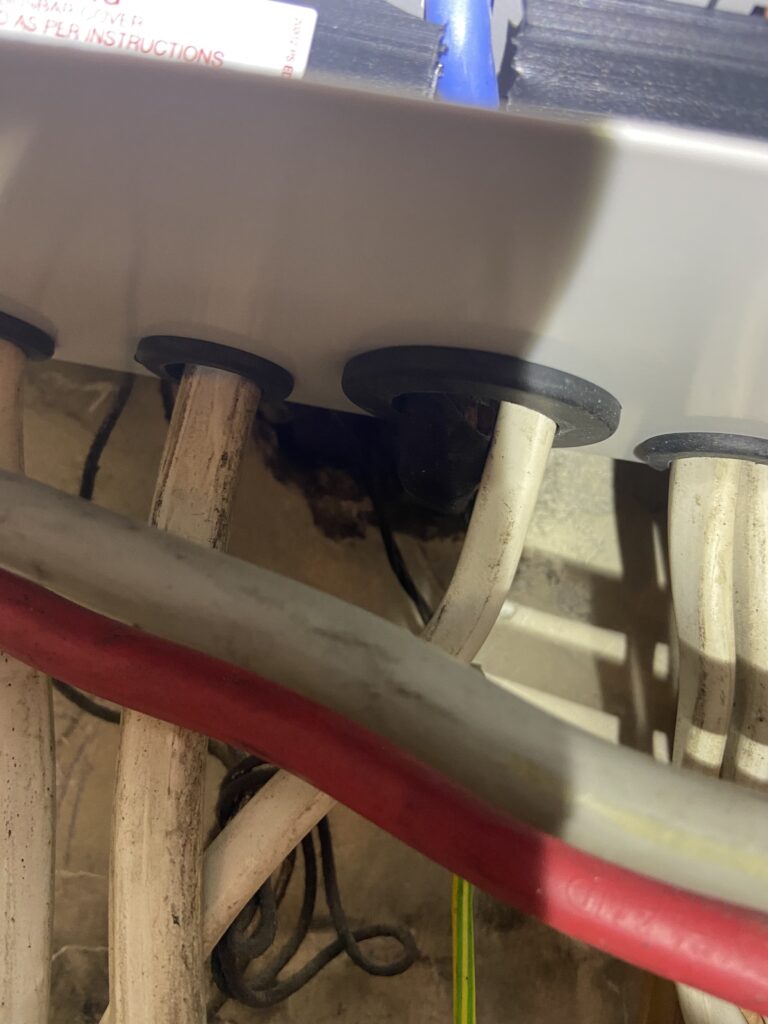
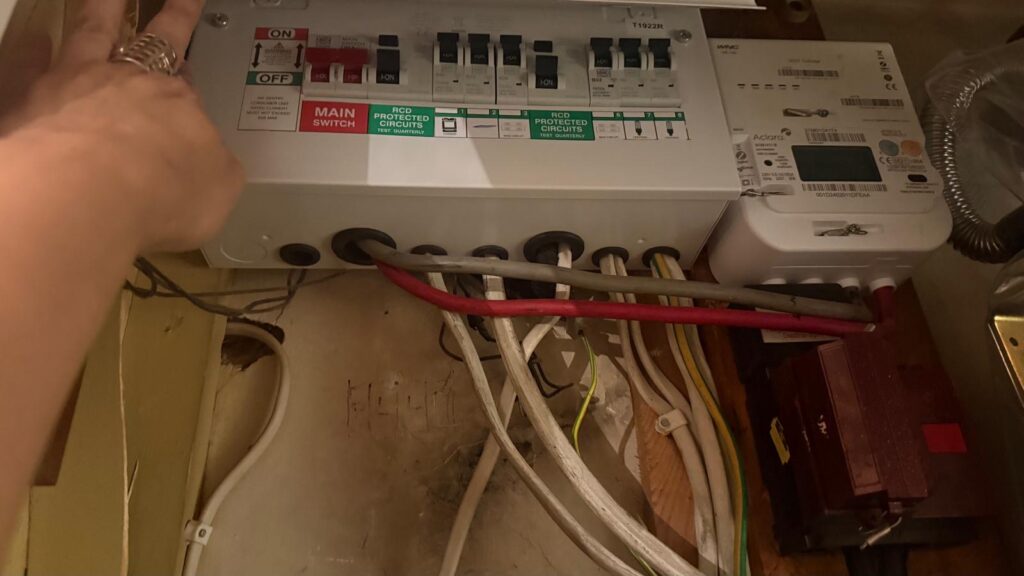
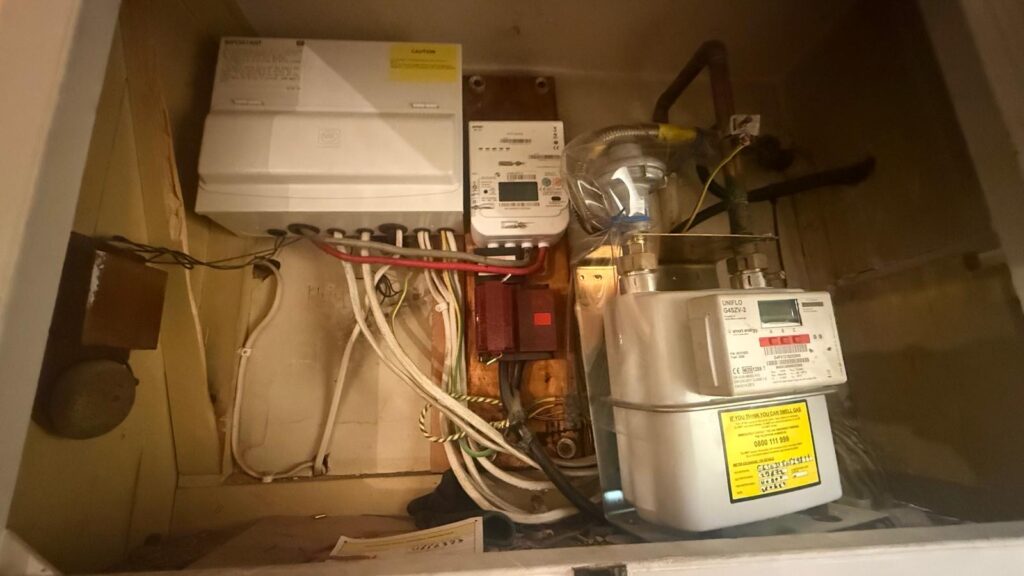
The fuse box had an open, unused hole in its casing. Normally this would be covered with a small blanking plate. Without it, someone could accidentally touch a live part inside. This is the kind of fault that gets fixed immediately, often during the same visit.
Several potentially dangerous issues (C2):
- No earthing to the gas and water pipes. In older homes, metal pipework should be “bonded” to earth. Without it, if a fault occurs elsewhere in the wiring, those pipes could become live.
- Damaged meter tails. The thick cables feeding power into the property were bent more tightly than allowed, and showed early signs of heat damage — a fire risk if left as is.
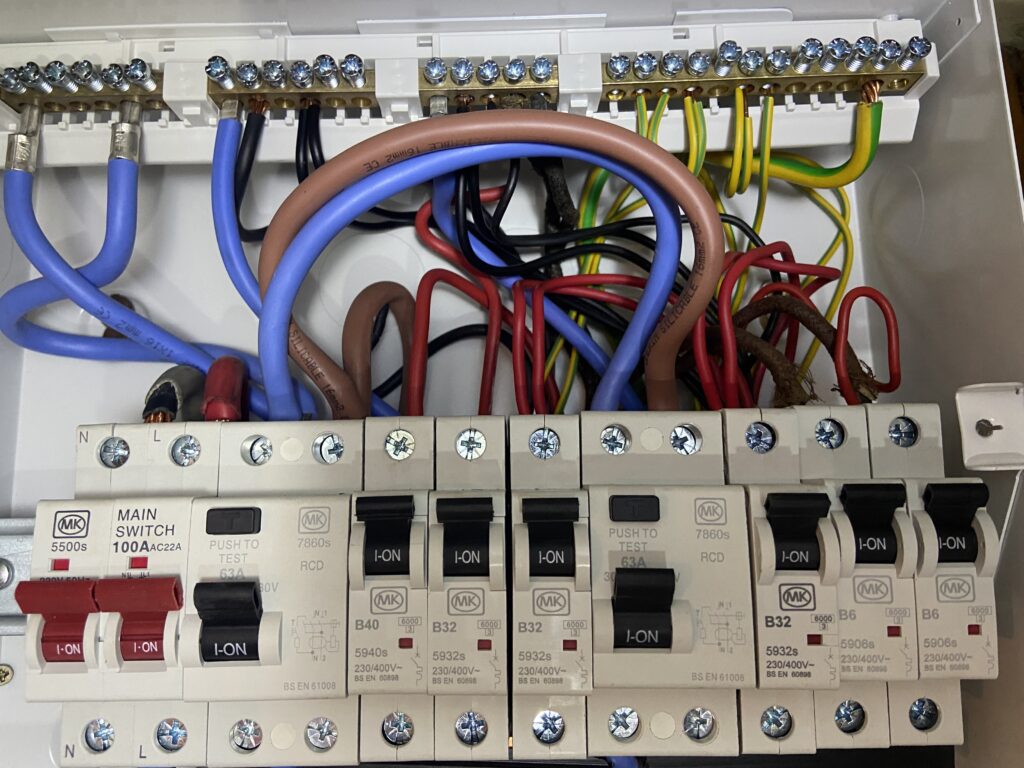
- Undersized cables. Some cables in the kitchen and at the fuse box were too small for the amount of power running through them, meaning they could overheat under normal use.
- A damaged cable with exposed wiring inside the fuse box — the outer protective layer had worn away, leaving live wires uncovered.
- A bedroom light fitting with no earth wire connected at all. This is a straightforward shock risk if anything goes wrong with that light.
- Old rubber-insulated cable (“VIR”), roughly 50 years old, that’s cracking and breaking down. This type of cable stopped being made decades ago, and once it deteriorates, it’s no longer a reliable safety barrier.
One item needing further checks (FI):
A high resistance reading was found on part of the ring circuit wiring, which usually points to a loose connection somewhere. It wasn’t dangerous enough to code as C1 or C2 outright, but it needs tracing and testing before it’s ruled safe.
Taken together, none of this is unusual for a property of this age — but it’s exactly why EICRs exist. Wiring that’s been fine for years can quietly become a real risk, invisible behind walls and inside the fuse box, until someone actually opens it up and tests it.
Why a 50-Year-Old Wiring System Is a Real Risk
Wiring doesn’t fail all at once — it wears down slowly, often without any warning signs you’d notice day to day. That’s exactly what we found in this flat.
The cable in question, known as VIR (vulcanised rubber insulated), was commonly used decades ago but hasn’t been manufactured for years. Rubber insulation like this becomes brittle and cracks with age and heat exposure. Once that happens, it no longer does its main job: keeping live wires safely separated from anything they could shock, ignite, or short-circuit against.
The tricky part is that a cable like this can look and work fine for years, right up until the insulation finally gives way. There’s no warning light, no smell, no obvious sign — just wiring quietly becoming less safe every year it stays in place.
This is why age matters so much in an EICR. A wiring system that was perfectly safe when installed 50 years ago is judged against today’s safety standards and today’s condition — not how it performed decades ago. In a property this age, finding decaying VIR cable isn’t rare. But rare or not, it’s still a real fire and shock risk sitting inside the walls of a home people are living in right now.
For landlords especially, this is the kind of finding that can’t be left for “next time.” It’s the difference between a routine upgrade and a serious hazard.
What “Unsatisfactory” Means for Landlords
If you’re a landlord and your EICR comes back unsatisfactory, here’s what you actually need to know.
It’s not optional to ignore. Under the Electrical Safety Standards in the Private Rented Sector regulations, landlords in England must ensure any C1 or C2 items are fixed by a qualified electrician within 28 days (or sooner if the report says so), and proof of the work must be sent to the tenant and, in some cases, the local council.
Your insurance may depend on it. Many landlord insurance policies require a valid, satisfactory EICR. If something goes wrong — a fire, an electric shock, a tenant injury — and your EICR was unsatisfactory and unresolved, you could find yourself without cover, or facing a claim that isn’t paid.
It’s also a legal safety duty, not just paperwork. An unsatisfactory result means real risks were found, not a technicality. Treating it as a box-ticking exercise misses the point — the codes exist because someone could genuinely get hurt.
It doesn’t mean start over. In most cases, including this one, the fix is targeted remedial work on specific items — not rewiring the whole property. A skilled electrician can usually quote and resolve C1 and C2 items quickly, then issue a follow-up certificate confirming the property is now satisfactory.
The bottom line: an unsatisfactory EICR is a clear to-do list, not a crisis — as long as it’s acted on properly and promptly.
What Happens Next: Fixing the Issues
Once an EICR comes back unsatisfactory, the process is straightforward:
- Get a clear quote for the remedial work. A good electrician will break down each C1 and C2 item separately, so you know exactly what’s being fixed and why. (You can see how we price remedial work on our EICR page.)
- Urgent items get fixed first. In this case, the open hole in the fuse box (C1) was a same-visit fix. The other C2 items — bonding, damaged cables, the earthing issues — were scheduled in as a full remedial job.
- Everything gets re-tested. After the repairs, the affected circuits are tested again to confirm they now meet current safety standards.
- A new certificate is issued. Once the work is done and tested, you receive updated documentation showing the installation is now satisfactory — the paperwork you need for tenants, insurers, or your own records.
For this flat, the retest was scheduled for the following month, giving enough time to complete the repairs properly rather than rush them.
The main thing to take from this: fixing an unsatisfactory EICR isn’t complicated once you have someone competent looking at it. The hard part is finding out the problems exist in the first place — which is exactly what the inspection is for.
Book Your EICR in Chiswick and London
If your property hasn’t had an EICR recently, or you’re a landlord due for your 5-year renewal, don’t wait for a problem to force the issue. Faults like the ones in this flat are common in older properties, and most are quick and affordable to put right once identified.
At SMR Groups, we carry out EICRs across Chiswick, Kew, Ealing, Acton, Fulham, Chelsea, Kingston, Richmond, Kensington, Twickenham, Sutton, Mayfair, Putney, Holland Park, Hammersmith, Knightsbridge, and Wimbledon Village. If any issues come up, we give you a clear, itemised breakdown of the remedial work and costs — no guesswork, no vague quotes.
See our full EICR pricing and remedial work breakdown
Frequently Asked Questions About Unsatisfactory EICRs
What does an unsatisfactory EICR mean?
It means the electrician found one or more safety issues serious enough to be coded C1 (danger) or C2 (potentially dangerous) during the inspection. It doesn’t mean the property is unusable — it means specific problems need fixing, usually through targeted remedial work rather than a full rewire.
How long do I have to fix an unsatisfactory EICR?
For landlords in England, C1 and C2 items must be fixed within 28 days, or sooner if the report specifies an earlier deadline. Proof of the completed work must then be sent to the tenant, and in some cases the local council.
Will an unsatisfactory EICR affect my landlord insurance?
It can. Many landlord insurance policies require a valid, satisfactory EICR. If an incident occurs while your report is unresolved, your insurer may refuse a claim.
Does an unsatisfactory result mean I need a full rewire?
Not usually. Most unsatisfactory reports, including this one, are resolved through specific remedial work on the flagged items — not a complete rewire. A full rewire is only needed if the wiring is extensively deteriorated throughout the property.
How much does it cost to fix an unsatisfactory EICR?
It depends entirely on what was found. A proper quote should break down each C1 and C2 item separately, so you know exactly what you’re paying for and why.